Explore Inbound and compare 5 curated alternatives
Inbound alternatives are tools that can replace or complement Inbound for similar workflows. Start by comparing SendGrid, Maileroo, Sender against your must-have features, budget, integrations, and team size, then validate pricing and migration effort on each official product page.
Last updated December 14, 2025
Inbound is a programmable email infrastructure that enables developers to send, receive, reply, and thread emails within mailboxes.
Inbound provides a programmable email API designed for developers to handle email operations programmatically. It allows users to add their own domain, configure MX records, and set up unlimited mailboxes without additional setup for each address.
This infrastructure supports sending emails from any address on the domain and receiving at any address, making it suitable for applications like support domains that route incoming mail to AI agents. The service includes routing capabilities for specific addresses to dedicated endpoints or catch-all forwarding to a single webhook.
It automatically preserves email threading, handling headers so programmatic replies appear in the correct thread. Webhooks are delivered quickly, typically under 100ms, with retries for failures using exponential backoff.
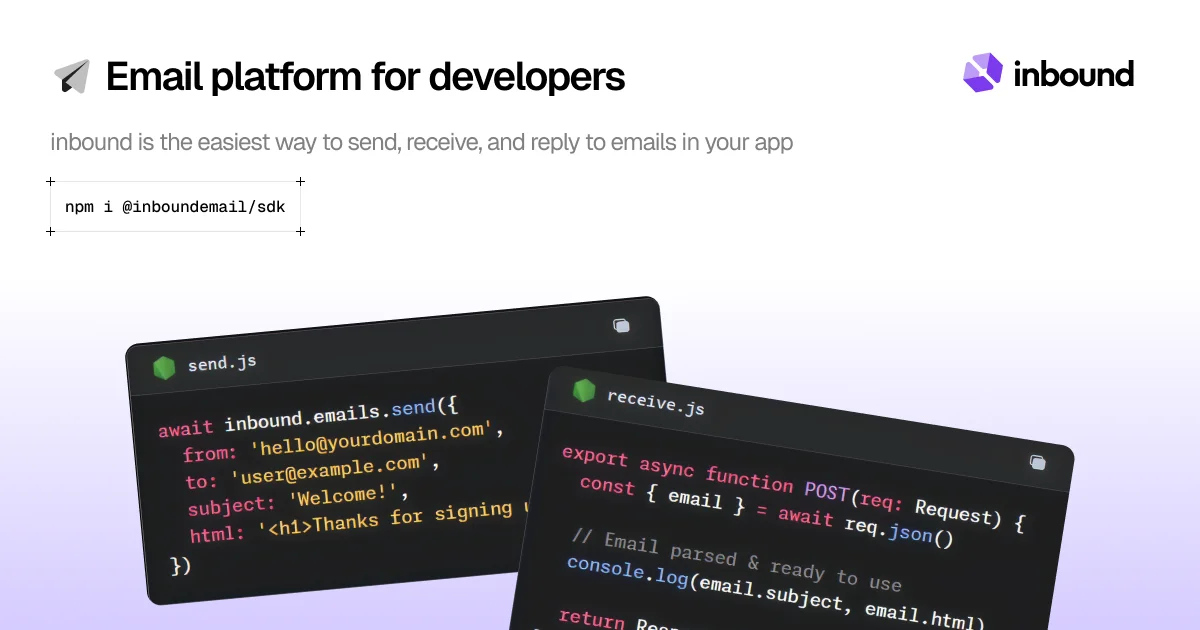
Inbound also incorporates spam detection for incoming emails, allowing users to reject, flag, or accept spam via mailbox settings. It integrates easily with development environments, as shown in code examples using tools like Bun for installation and sending emails.
The best Inbound alternatives include SendGrid, Maileroo, Sender. Choose based on feature fit, pricing, integrations, and the workflow you need to replace.
List your required features, compare pricing and usage limits, check integrations, review migration effort, and test the top candidates with your real workflow before switching.
Some Inbound alternatives may have free plans or trials. Free limits often depend on seats, usage volume, storage, or advanced features, so verify current pricing on official sites.
Open-source alternatives depend on the product category. If you need self-hosting or source access, look for active repositories, permissive licenses, and recent maintenance activity.
SendGrid may differ from Inbound in pricing, feature depth, integrations, support, and target users. Compare both products against your required workflow before deciding.
Wispr Flow
The voice-to-text AI that turns speech into clear, polished writing in every app.
Simple Analytics
The privacy-first Google Analytics alternative.
Resend
The best way to reach humans instead of spam folders. Deliver transactional and marketing emails at scale.
MailerSend
Intuitive email API and SMTP
LiveChat
LiveChat® is intuitive customer service software that is quick to set up, easy for your team to use, and a go-to choice for your customers.
